
Modular Guarding
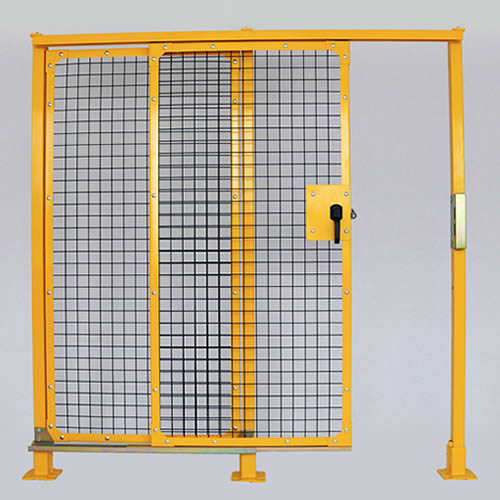
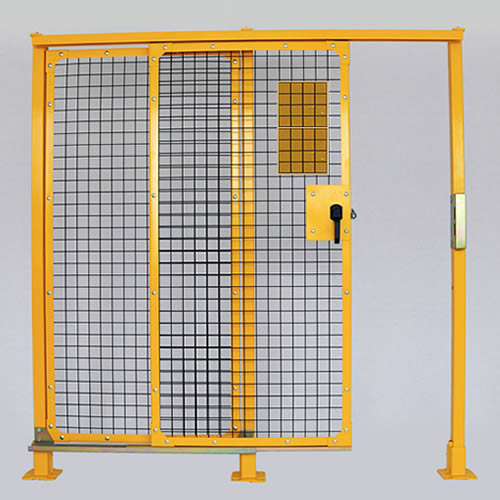
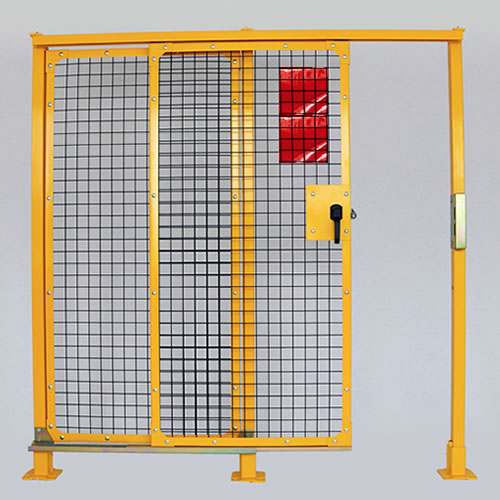
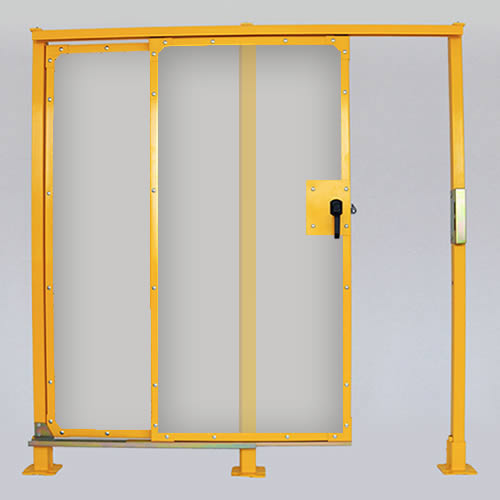
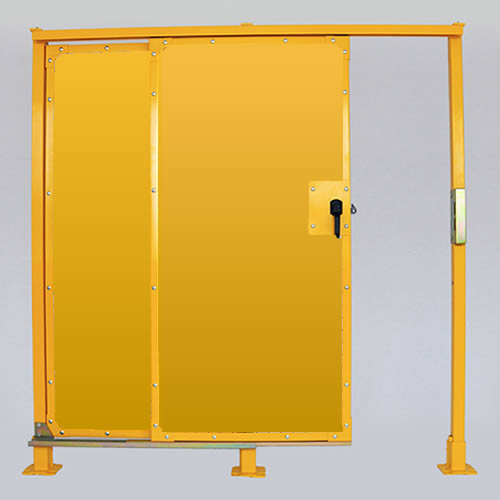
ARK Automation supplies slide gates for modular machine guarding systems, robotic cells, automated machinery, conveyors, production equipment, and other industrial applications that require controlled access through perimeter guarding.
A slide gate moves horizontally along the guarding line instead of swinging outward into the surrounding floor area. This makes slide gates particularly useful where machinery, aisles, workstations, or other equipment limit the space available for a conventional hinged gate.
For exact dimension values, please refer to the table below.
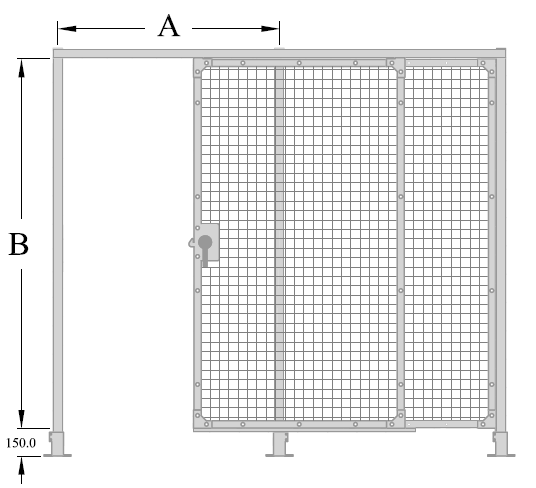
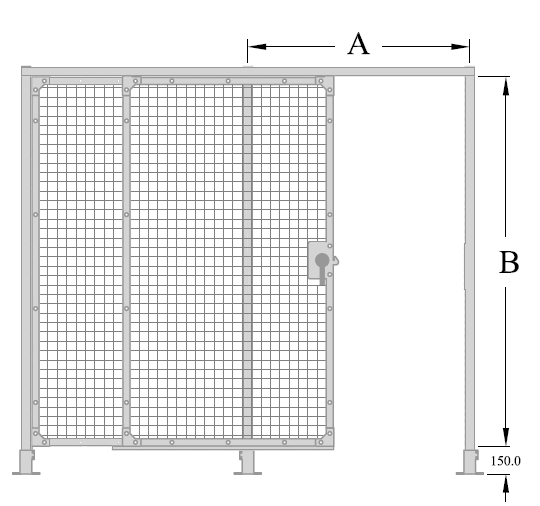
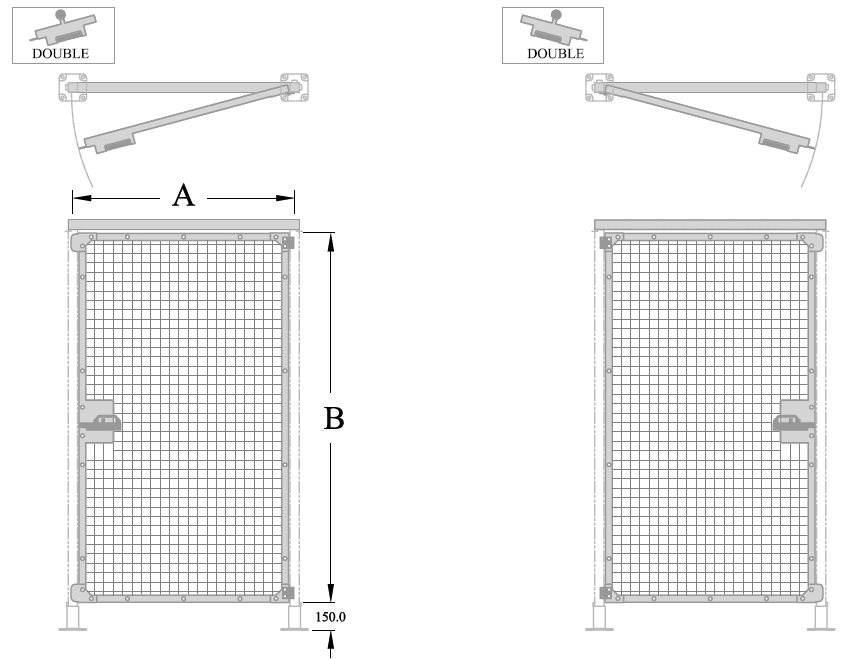
Access points need to be planned around both the guarded equipment and the surrounding workspace. A traditional hinge gate requires enough open floor area for the gate to swing, which may not be practical in compact production cells or busy industrial environments.
A horizontal slide gate keeps the gate movement closer to the guarding perimeter and eliminates the need for a large swing radius.
Common applications can include:
Visit our machine guarding applications page for additional examples of modular guarding used around industrial machinery and automated equipment.
A slide gate can be a practical choice when there is not enough clear floor area for a hinge gate to open without interfering with an aisle, workstation, machine, or other equipment.
Because the gate moves horizontally, sufficient space is still required along the guarding line for the panel to travel into the open position. The surrounding guarding layout should therefore be reviewed to make sure the gate has a clear path throughout its full range of movement.
For wider access requirements, a double slide gate may provide a larger opening. Where horizontal space is limited but sufficient overhead clearance is available, a vertical gate may also be worth considering.
ARK Automation slide gates are available in a range of sizes and configurations to suit different guarding layouts and access requirements.
Available gate heights include:
Available panel styles include:
ARK also provides left-hand and right-hand slide gate configurations so the direction of travel can be matched to the surrounding equipment and guarding layout.
The product table below provides current part numbers, widths, heights, opening directions, panel styles, and weld screen colour options. Refer to the table and associated product documentation for exact dimensions before selecting a gate.
The opening direction of a slide gate determines which way the gate travels along the guarding system when opened. Selecting the correct orientation is important because the gate needs enough unobstructed horizontal space beside the opening.
When planning the opening direction, consider:
Reviewing the complete equipment layout before ordering can help prevent the gate from being positioned where machinery or facility constraints interfere with its travel.
Different gate styles solve different access and space requirements within a modular guarding system.
A hinge gate provides straightforward access where sufficient swing clearance is available. A slide gate eliminates that swing radius but requires horizontal space beside the opening.
A double slide gate can provide a wider access point where a single sliding panel is not sufficient, while a vertical gate moves upward where horizontal space is limited.
ARK also offers top slide gates and larger total-access configurations for applications with different structural or access requirements.
The correct slide gate should be selected as part of the complete machine guarding layout rather than based on opening width alone. The equipment, hazards, surrounding floor space, frequency of access, and movement of personnel or materials all affect the appropriate configuration.
Before selecting a slide gate, consider:
A slide gate creates a movable access point in an otherwise physical guarding perimeter. The hazards that become accessible when the gate is opened should therefore be considered as part of the overall machine safeguarding design.
In Ontario, Ontario Regulation 851 for Industrial Establishments includes requirements for guarding exposed moving parts and other machinery hazards so workers cannot access hazardous areas.
Depending on the equipment and risk assessment, a slide gate may also need to form part of an interlocked guarding system. An interlock can be incorporated into a safety circuit using components such as a safety relay or programmable safety controller.
For facilities operating in the United States, OSHA 29 CFR 1910.212 establishes general machine guarding requirements. OSHA also identifies movable gates as one type of barrier that can form part of a perimeter safeguarding system.
The appropriate safeguarding method depends on the machine, hazards, stopping characteristics, frequency of access, and applicable safety requirements. For additional planning information, see ARK Automation’s guide to machine guarding standards and ANSI considerations.
Slide gates can be combined with ARK Automation panels, posts, brackets, and other gate styles to create a complete machine guarding enclosure around industrial equipment.
Because the system is modular, different access solutions can be used around the same production cell. Slide gates can be positioned where swing clearance is limited, hinge gates can provide conventional personnel access, and wider or specialized gates can be used where equipment or material movement requires a larger opening.
To download the Catalogue Page, click on the link below:
Learn more about horizontal slide gates, available sizes and panel styles, opening directions, space requirements, interlocking, and what to consider when planning an access point for a machine guarding system.
A machine guarding slide gate is a movable access gate that travels horizontally along the guarding perimeter rather than swinging outward. It can provide access to machinery, robotic cells, production equipment, and other guarded areas while reducing the amount of open floor space required around the gate.
The main advantage of a slide gate is that it does not require the swing radius of a conventional hinged gate. This can make it useful beside aisles, workstations, conveyors, machinery, or other areas where available floor space is limited.
A slide gate needs sufficient unobstructed horizontal space along the guarding line for the gate panel to move into its open position. The exact space required depends on the gate width and configuration, so nearby equipment, posts, corners, and other guarding components should be considered before selecting the opening direction.
ARK Automation lists slide gates in heights of 1400 mm, 1700 mm, 2000 mm, and 2300 mm. Refer to the product table on this page for current part numbers, widths, opening directions, panel styles, and exact dimensions.
ARK’s current slide gate options include 1×1 welded wire mesh, 2×2 welded wire mesh, Lexan, and solid steel configurations. The appropriate panel style depends on the machinery, visibility requirements, surrounding guarding system, and application.
Yes. ARK Automation provides left-hand and right-hand slide gate configurations. The correct direction should be selected based on the available horizontal travel space, surrounding machinery, operator workflow, and guarding layout.
A hinge gate swings through an arc as it opens, while a slide gate moves horizontally along the guarding perimeter. Slide gates are useful where swing clearance is limited, while hinge gates may be simpler where sufficient open floor area is available.
A double slide gate may be appropriate when a wider access opening is needed than a single slide gate can practically provide. The required opening, available horizontal space, equipment movement, and guarding layout should all be considered.
Yes. Slide gates can provide controlled access to robotic and automated cells when the gate size and configuration suit the guarding layout. The complete application should also be evaluated for appropriate safety distances, access controls, interlocking, and other safeguarding measures.
Whether a slide gate requires interlocking depends on the machine hazards and the results of the risk assessment. If opening the gate provides access to hazardous machinery while a dangerous condition could exist, an interlocked guarding system may be required. The appropriate interlock, safety circuit, and machine response depend on the specific equipment and applicable safety requirements.
Helpful information includes the required opening width and height, preferred opening direction, available horizontal travel space, surrounding guarding dimensions, nearby machinery, panel style, access requirements, and any known interlocking or machine safety requirements. Drawings, CAD files, photos, and guarding layouts can also help ARK Automation review the application.
Need help choosing a slide gate for your machine guarding system, robotic cell, production equipment, or industrial access area? Contact ARK Automation to discuss your required opening, available horizontal space, opening direction, panel options, and related machine safety requirements. You can also upload related files, drawings, layouts, or product lists using the form below.
Search our website
Type part numbers or product names below to get started.